Can You Use a Food Processor as a Blender?
Yes, you can use a food processor as a blender for thick mixtures and small amounts of liquid. A blender is usually better for smooth drinks and pourable blends.
On this page (10 sections)
- Can you use a food processor as a blender?
- What can a food processor blend well?
- When is a blender the better choice?
- How much liquid can you put in a food processor?
- Can a food processor crush ice or blend hot soup?
- Would a food processor and blender combo suit you?
- Which appliance should you use for common jobs?
- Is the Ninja BN601 a good fit if you mainly need a processor?
- How can you get a smoother blend in a food processor?
- So, can you use a food processor instead of a blender?
Yes, you can use a food processor as a blender for thick mixtures and small amounts of liquid, such as dips, chunky sauces, and some smoothie blends. A blender usually works better for smooth drinks and thin mixtures because its container and blade setup are made for blending liquids.
The right choice depends on texture and volume. A processor can chop and puree ingredients, but it may leave a drink less smooth or make a thin blend difficult to control.
Can you use a food processor as a blender?
Yes, a food processor can blend some foods, especially thick mixtures. Its bowl and blade can chop ingredients into a puree, but the results may differ from a blender when you add a lot of liquid.
A processor is a practical option for hummus, thick dips, pesto, and small batches of sauce. For smoothies, start with a modest amount of liquid and add more only if the ingredients are not moving.
Check your appliance manual before blending unfamiliar ingredients. It explains which attachments to use and any limits for liquid, ice, or hot foods.
What can a food processor blend well?
A food processor is most useful for thick blends that hold their shape. Its wide bowl gives ingredients room to spread, so you may need to stop and scrape the sides to help everything reach the blade.
It can puree cooked vegetables, mash soft ingredients, and mix dips. If you want a smooth result, cut solid ingredients into manageable pieces and add liquid gradually.
For more examples of processor jobs, see what a food processor is used for. That guide covers chopping, slicing, shredding, and other uses.
Can a food processor make a smoothie?
A food processor can make a smoothie, but the texture may be thicker or less even than a blender's. It can work for a small batch with soft fruit and enough liquid to help the ingredients move.
Add liquid first if your manual recommends it, then add fruit in pieces. Stop the machine if ingredients stick to the bowl, scrape them down, and continue in short runs.
A food processor may be less suited to leafy greens, seeds, or a large drink batch. If smoothies are a regular part of your routine, a blender is the more direct fit.
When is a blender the better choice?
Choose a blender for pourable drinks, thinner sauces, and larger liquid batches. A blender pitcher is shaped for ingredients to circulate around its blades during blending.
A food processor's wider bowl can leave liquid spread out from the blade, especially when the amount is small. It may also be harder to pour a thin blend neatly from a processor bowl.
The Ninja Professional Plus Blender (BN701) is a dedicated blender with a 72 oz pitcher and 3 Auto-iQ programs. Its pitcher has a 64 oz max liquid capacity for family-size batches of smoothies or frozen drinks.
Choose a processor instead if your main jobs are chopping vegetables, shredding cheese, or making dough. The best food processors for chopping vegetables guide can help if prep work is your priority.
How much liquid can you put in a food processor?
Use only the amount of liquid your processor's manual allows. The bowl's fill line matters, and the safe amount can vary by model and task.
A small amount of liquid may be enough for a dip or thick sauce. For a drink, add liquid gradually and stop if it pools, splashes, or leaks around the lid.
Never fill the bowl to the brim for blending. Leave room for ingredients to move, and make multiple batches when your recipe exceeds the recommended capacity.
Can a food processor crush ice or blend hot soup?
Don't assume your food processor can handle ice or hot liquids. Check the manual for the specific model and attachment before trying either task.
Ice can be hard on blades and other parts, depending on the appliance. Our guide to whether a food processor can crush ice explains why model instructions matter.
Hot liquid can build pressure in a closed container and cause splashing or burns. Let food cool as directed by your appliance manual, and use a blender only if its instructions allow the temperature and method.
Would a food processor and blender combo suit you?
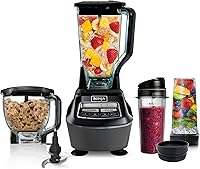
A combo suits you if you want both a processor bowl and a blender container for different jobs. Check which containers and blades are included, and make sure the setup fits your counter and storage space.
The Ninja Kitchen System with BlendSense (TB401) includes a 72 oz pitcher, an 8-cup bowl, a chopping blade, and a slicing and shredding disc. The bowl supports chopping, purees, and processing up to 2 lb of dough, while the pitcher is suited to blended drinks.
A combo adds parts to store and clean, so it may not be worthwhile if you only make drinks. Compare more options in our guide to food processor and blender combos.
Which appliance should you use for common jobs?
Match the appliance to the texture you want: use a processor for thick, chopped mixtures and a blender for smooth, pourable ones. For any task outside those basics, follow the manual for your model.
| Job | Better fit | Why |
|---|---|---|
| Hummus or thick dip | Food processor | The wide bowl suits a thick mixture |
| Chunky sauce or pesto | Food processor | It can chop ingredients while keeping texture |
| Smooth drink | Blender | The pitcher is designed for blending liquids |
| Large smoothie batch | Blender | A pitcher can hold a larger drink batch |
| Chopping vegetables | Food processor | Its chopping blade is made for food prep |
| Dough | Food processor with dough blade | Use a model and attachment suited to dough |
If you're choosing a processor for dough, see food processors for kneading dough. For a general overview, what the best food processor means for different jobs can help you compare size and use.
Is the Ninja BN601 a good fit if you mainly need a processor?
The Ninja Professional Plus 9-Cup Food Processor (BN601) fits readers who want a food processor for prep tasks and thick purees. It includes a 9-cup bowl, chopping blade, dough blade, and reversible slicing and shredding disc.
Its 4 Auto-iQ programs cover chopping, slicing, pureeing, and dough making. That makes it a more direct fit for food prep than for frequent smoothies or large amounts of liquid.
Choose a blender if you mainly want drinks with a smooth, pourable texture. If you're unsure whether you need a processor at all, read do you really need a food processor?.
How can you get a smoother blend in a food processor?
Use small pieces, add liquid gradually, and pause to scrape the bowl. These steps help ingredients reach the blade, though they can't make every food processor work like a blender.
Start with a small batch and avoid overfilling. If the mixture stays in a ring around the bowl or the blade spins without pulling ingredients in, stop and adjust the amount or add a little liquid if allowed.
Run the machine in short pulses when you want control over texture. For a very smooth drink, transfer the mixture to a blender if your processor is not producing the result you want.
So, can you use a food processor instead of a blender?
Use a food processor for thick dips, purees, and small blends; choose a blender for smooth drinks and liquid-heavy recipes. If both jobs matter, a combo gives you separate containers for each.
Pick the BN601 if you mainly prep food, the BN701 if you mainly blend drinks, or the TB401 if you want both a processor bowl and pitcher. Check your appliance manual before processing ice, hot foods, or large amounts of liquid.
Frequently asked questions
Can a food processor blend smoothies?
A food processor can blend a thick smoothie, but it may not make a drink as smooth as a blender, especially with leafy greens or small seeds. Use enough liquid for the ingredients to move, work in small batches, and stop to scrape the bowl if needed.
A blender is the better fit for frequent, pourable smoothies.
Can you put liquid in a food processor?
Yes, but stay within the bowl's fill line and use the amount your manual allows. Food processors are suited to thicker mixtures, and excess liquid may leak or slosh rather than circulate cleanly.
For soups, thin sauces, or large amounts of liquid, use a blender designed for that job.
Can a food processor crush ice?
Some food processors can handle ice, but the answer depends on the model and its instructions. Don't assume every bowl, blade, or motor is suited to crushing ice.
Check the manual first, and see our guide to whether a food processor can crush ice for more.
Is a food processor and blender combo worth it?
A combo can make sense if you want one appliance for both drink blending and food prep. Check that it includes the containers and blades for the jobs you do, and consider how much counter and storage space it needs.
If you mainly make smoothies, a dedicated blender may be simpler.