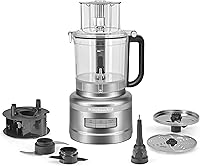
What Is the Best Food Processor? A Plain Guide
The best food processor depends on what you make most: choose a mini processor for small prep, a 7-cup model for everyday jobs, a 9-cup processor for family batches, or a 14-cup machine for larger quantities. Match the included blade and discs to your regular recipes.
On this page (9 sections)
- What is the best food processor for your kitchen?
- How much food processor capacity do you need?
- Which food processor attachments matter for your jobs?
- What should you check before buying a food processor?
- How do you set up a food processor?
- What common food processor mistakes should you avoid?
- Food processor or mini chopper: which fits better?
- How should you care for a food processor?
- Which food processor should you choose?
The best food processor for your kitchen depends on your regular batch size and the jobs you repeat. A mini model handles small prep, a 7-cup bowl suits many everyday tasks, and 9- to 14-cup bowls offer more room for family meals and larger batches.
The question “what is the best food processor?” has no single answer for every cook. Start with what you chop, slice, shred, puree or mix, then check the bowl and included attachments before weighing controls and cleanup.
For a shorter list of options, see our best food processors for home use. This guide helps you choose by capacity, task, setup and care.
What is the best food processor for your kitchen?
Choose the processor that fits your most common jobs and batch size. A small bowl is convenient for modest amounts, while a larger bowl and extra discs matter when you prep for a group or want several kinds of cuts.
| Your main need | A useful starting point | What to check |
|---|---|---|
| Herbs, small portions or dressings | 3-cup mini processor | Bowl, blade and cleanup |
| Regular meal prep | 7-cup processor | Included slicing and shredding options |
| Family meals or weekly prep | 9-cup processor | Feed chute, parts and controls |
| Large batches or dough | 14-cup processor | Instructions, attachments and storage |
These capacities are starting points, not household rules. A person who cooks in batches may need more room than a larger household that prepares one serving at a time.
If vegetables are your main reason for buying, compare the options in our food processors for chopping vegetables guide. For baking, see our best food processors for kneading dough.
How much food processor capacity do you need?
Choose a bowl that can handle your largest regular batch without being awkward to store. A small bowl may mean working in rounds; a large machine takes more counter or cabinet space.
Is a 3-cup food processor enough?
A 3-cup processor is enough for small jobs such as chopping herbs, dicing a little produce or grinding hard cheese. It can also handle modest portions of dressing or dip, where a full-size bowl may feel oversized.
The Cuisinart Mini-Prep 3-Cup Food Processor has a reversible blade with chop and grind functions. Its 24-ounce work bowl and light 2.2-pound body suit small portions and easy storage.
Choose it when small prep is the point. Skip it if you regularly slice or shred larger amounts.
It may also be a poor fit if you want a disc for those jobs. Its included blade does not replace the slicing and shredding attachments found on some full-size processors.
When does a 7-cup processor make sense?
A 7-cup model is a middle-size option for everyday chopping, shredding, slicing and pureeing. It can suit regular meal prep without requiring the space of a larger bowl.
The KitchenAid 7-Cup Food Processor (KFP0718) keeps its blade and disc inside the bowl for storage. Its 2-in-1 feed tube and high, low and pulse controls give you a straightforward set of options.
Choose this size if you want one processor for common home prep and do not often prepare very large batches. Skip it if your routine regularly calls for a larger bowl or a dough blade.
Confirm the included parts suit your recipes.
Should you buy a 9-cup or 14-cup processor?
A 9- or 14-cup processor makes sense if you cook for a group, prepare food ahead or want more room for larger quantities. Compare the included accessories and storage footprint before choosing between them.
The Cuisinart Custom 14-Cup Food Processor has an extra-large feed tube and a 14-cup bowl. It includes a 4 mm slicing disc, a shredding disc and a chopping and mixing blade; Cuisinart describes it for kneading dough.
The Ninja Professional Plus 9-Cup Food Processor (BN601) includes a chopping blade, dough blade and reversible slicing and shredding disc. Its 4 Auto-iQ programs provide presets for common tasks.
Its bowl is a step down in capacity from the Cuisinart 14-cup model.
Choose the Cuisinart if large batches and an extra-large feed tube matter more to you. Choose the Ninja if you want a 9-cup bowl, a dough blade and preset programs.
Skip either size if most of your work is a spoonful of herbs or a small portion of dressing. See our best large food processors guide for more capacity-focused options.
Which food processor attachments matter for your jobs?
Buy for the attachments you will use, not the longest accessory list. A chopping blade does not make uniform slices or shred a large amount of cheese as conveniently as the right disc.
- Chopping or multi-purpose blade: useful for chopping, mixing and many puree jobs.
- Slicing disc: helps cut produce into slices; check whether its fixed thickness suits your recipes.
- Shredding disc: useful when you regularly shred cheese or other ingredients.
- Dough blade: worth considering if you plan to make dough and the manual supports your recipe.
- Feed tube: guides ingredients into the bowl; a wider opening can fit larger pieces.
The KitchenAid 7-cup model includes a multi-purpose blade and reversible slicing and shredding disc. The Ninja 9-cup model includes those types of cutting options as well as a dough blade, while the Cuisinart 14-cup model includes a chopping and mixing blade with separate slicing and shredding discs.
The Cuisinart 14-cup model's slicing and shredding blades are not adjustable. If you need a particular cut, check the disc description and recipe guidance before buying rather than assuming the thickness can be changed.
For baking guidance, read what size food processor you need for pie crust. Recipes and manuals can set different batch limits, so follow the instructions for the machine you choose.
What is the best food processor for chopping vegetables?
The best processor for vegetables depends on whether you mostly chop or also slice and shred. A mini processor can chop a small amount, while a full-size model with discs is a better fit for larger quantities and more consistent slices.
Pulse in short bursts when chopping, and stop to check the texture. Long uninterrupted runs can turn pieces into a finer mix than you intended.
For slices or shreds, use the matching disc and feed ingredients at a steady pace.
What is the best food processor for dough?
A processor with a dough blade can suit occasional dough jobs when its instructions cover your recipe and quantity. The Ninja 9-cup model includes a dough blade and a dough preset; Cuisinart describes its 14-cup model for kneading dough.
Do not assume a dough blade makes every processor suitable for every recipe. Follow the model’s manual and use its recommended amounts.
Compare a stand mixer if you bake often or make large batches. Our guide to using a food processor to make dough explains the practical differences.
What should you check before buying a food processor?
Compare capacity, attachments, controls, cleanup and storage before you choose. These details affect whether the machine fits your routine after the first few uses.
Does the bowl fit your typical batch?
Think about the amount you prepare in a normal week. A mini bowl can be convenient for a little garlic or herbs, while a larger bowl gives you more room to prep ingredients for family meals or multiple portions.
A bowl’s cup capacity does not tell you the right quantity for every recipe. Ingredients can behave differently during processing, so use the fill marks and instructions for the model.
Do the included parts cover your regular tasks?
Check that the processor includes the blade or disc for your main job. If you shred cheese most weeks, make sure a shredding disc comes with the model instead of assuming every processor includes one.
Consider where the parts will live when you are not using them. The KitchenAid stores its attachments in the bowl, while other designs may need a separate drawer or cabinet space.
Will the controls suit your cooking?
On, off and pulse controls can be enough for many jobs. Presets add a one-touch option, but you still need to check texture and follow the instructions.
The KitchenAid offers high, low and pulse settings. The Ninja has presets for chopping, slicing, pureeing and dough making; the Cuisinart 14-cup model has on and off/pulse buttons.
Is cleanup manageable?
Dishwasher-safe removable parts can reduce washing by hand, but check which pieces can go in the dishwasher. The Cuisinart Mini-Prep has a dishwasher-safe bowl and lid, while its motor base should be wiped with a damp sponge or cloth.
The KitchenAid describes a quick-clean method using warm water and a small amount of dish soap in its bowl. Use the machine’s manual for cleaning steps, and keep water away from the motor base.
Can you store and handle the machine safely?
Measure the counter or cabinet space where you plan to store the base, bowl and accessories. Consider weight if you expect to move the machine between uses.
Set the machine on a stable, dry surface and assemble it according to its manual. Keep the lid secured during operation.
Unplug the unit before handling blades or discs, whose edges can cut even when the motor is off.
How do you set up a food processor?
Set up a food processor on a clear, stable surface and follow the manual’s assembly order. Correct assembly helps the bowl and lid lock into place before you add ingredients or turn the motor on.
- Clear the counter. Leave room to set down the bowl, lid and attachments without crowding the machine.
- Check the parts. Identify the blade or disc needed for your task before assembling anything.
- Fit the bowl and lid. Use the manual’s locking steps; safety features may prevent operation if parts are not positioned correctly.
- Prepare ingredients. Cut large ingredients to fit the feed tube, and remove anything the recipe says not to process.
- Secure the correct attachment. Keep fingers away from sharp edges and handle discs by their safe edges.
- Use the right control. Start with brief pulses when you need to check texture, or use a preset only for the task it names.
- Unplug before removing parts. Wait for the blade to stop, then lift it carefully.
Do not force the lid or bowl if the pieces do not seat. Check the manual for the exact assembly and safety steps for your model.
What common food processor mistakes should you avoid?
Avoid overfilling the bowl, using the wrong attachment and running the machine longer than the texture needs. These mistakes can make results uneven or harder to control.
- Choosing capacity by household size alone: focus on your usual batch and whether you want to process it in one round.
- Assuming every model slices or shreds: check the included discs before buying.
- Filling past the guidance: follow the bowl marks and manual, especially for dough or liquids.
- Holding the button too long: pulse and inspect when you want chopped pieces, not a puree.
- Adding ingredients that are too large: cut them down enough to fit the feed tube safely.
- Rinsing the motor base: clean removable parts as instructed and wipe the base without immersing it.
- Storing loose blades carelessly: put sharp parts somewhere they cannot be grabbed by the cutting edge.
If the food is not processing evenly, stop, unplug the machine and redistribute ingredients as the manual allows. Do not reach into a bowl while the blade is in place.
Food processor or mini chopper: which fits better?
A mini chopper fits small, quick prep, while a full-size food processor suits larger batches and jobs that need multiple attachments. Decide based on how much you process in a normal session.
The Cuisinart Mini-Prep 3-Cup Food Processor is suited to modest portions of herbs, vegetables or hard cheese. A 7-cup or larger machine gives you more room and may include discs for slicing and shredding.
Pick the mini if you value compact storage and rarely process more than a little at a time. Skip it if you make family-size batches or need slicing and shredding discs.
If you want a full-size machine for routine meals, consider the KitchenAid 7-cup model.
How should you care for a food processor?
Care for a processor by cleaning removable parts promptly and keeping the motor base dry. Food can cling to blades and discs, so clean them after each job using the method in the manual.
Remove attachments carefully, keeping fingers clear of sharp edges. Wash dishwasher-safe parts only if the manual allows it, and wipe the motor base with a damp cloth rather than submerging it.
Dry parts before storage and keep blades protected from loose utensils. Before the next use, check that the bowl, lid and attachment fit correctly; stop if a part is cracked or does not lock as intended.
Which food processor should you choose?
Choose the Cuisinart Mini-Prep for small portions, the KitchenAid 7-cup for regular home prep, the Ninja 9-cup for preset programs and dough options, or the Cuisinart 14-cup for larger batches. Check the attachments and storage space against the jobs you do most often.
If you mostly chop a little produce, the mini processor avoids buying capacity you may not use. For everyday slicing and shredding, the KitchenAid offers a mid-size bowl and stores its attachments inside; choose the Ninja when its presets and dough blade match your routine.
Pick the 14-cup Cuisinart when the larger bowl and extra-large feed tube solve a regular need.
That is the practical answer to what is the best food processor: buy the smallest model that comfortably handles your common batch and includes the parts for your main jobs. If you are unsure whether a processor belongs in your kitchen, read do you really need a food processor?, then browse our food processor picks.
Frequently asked questions
What is the best food processor size for most homes?
A 7-cup bowl is a practical starting point for everyday chopping, slicing, shredding and pureeing. Choose a 3-cup mini processor for herbs, dressings and modest portions, or a larger bowl if you often prepare family meals or cook ahead.
Think about your usual batch, not the biggest recipe you might make once a year.
Is a 14-cup food processor too big for everyday use?
A 14-cup processor can work for everyday cooking if you regularly prep large amounts or want room for bigger batches. It can be excessive for quick jobs such as chopping a few herbs, and the larger body needs a suitable storage spot.
Measure the counter or cabinet space where you plan to keep it.
Can a food processor make dough?
Some processors include a dough blade or are described for kneading dough, but their parts, capacity and instructions differ. Follow the manual for the recipe and batch size instead of assuming every processor can handle every dough.
If you bake often or make large batches, compare a food processor with a stand mixer.
What features matter most in a food processor?
Start with bowl capacity and the parts for your regular jobs. A chopping blade handles many prep tasks, while slicing and shredding discs matter for those cuts; a dough blade, feed tube, pulse control and dishwasher-safe parts can also shape your choice.
Extra programs help only when they match your routine.
How do I choose between a food processor and a mini chopper?
Choose a mini chopper for small tasks such as herbs, dressings and a little chopped produce. A full-size processor suits larger batches and can include slicing or shredding discs that a mini model may not have.
Let your common batch size and available storage decide.