Can a Food Processor Crush Ice Safely?
A food processor can crush ice only when its manual approves the task and names the right attachment. For drinks, choose a blender pitcher designed for ice, and use small batches with the lid locked.
On this page (10 sections)
- Can a food processor crush ice safely?
- Why can ice damage a food processor?
- How should you crush ice in an approved machine?
- Is a blender better for crushed ice?
- Which system fits ice and food prep?
- What should you check before adding ice?
- What mistakes should you avoid?
- How do you clean and store the machine after crushing ice?
- What should you do if the manual doesn't mention ice?
- How can you decide whether to use a processor for ice?
A food processor can crush ice only when its manual approves the task and names the right attachment. For drinks, a blender pitcher designed for ice is usually the better choice; either way, use small batches and short pulses.
A processor's ability to chop vegetables or knead dough doesn't mean it can safely handle hard cubes. The motor, bowl, blade, and locking parts are designed to work together, so check the instructions for the exact vessel you plan to use.
Can a food processor crush ice safely?
It depends on the model and the attachment. Some kitchen systems include a blender pitcher with blades described for ice, while the separate food processor bowl is intended for jobs such as chopping and mixing.
Don't decide from the wattage alone. Check the manual for permitted ingredients, fill limits, and the recommended speed or pulse method.
If the manual doesn't mention ice, use a blender approved for ice or choose another option. A matching attachment matters as much as the motor.
The Ninja Mega Kitchen System comes with a 72 oz blender pitcher and Total Crushing Blades described for ice, plus a separate 8-cup food processor bowl and chopping blade. Use the pitcher for ice according to its instructions; the processor bowl is specified for chopping, pureeing, and mixing.
Why can ice damage a food processor?
Ice can put sudden strain on a blade and motor, especially when cubes jam together. A machine that isn't designed for ice may stall, shift, or leave large and small pieces mixed together.
A sharp blade doesn't make every task safe. A chopping attachment may be suitable for vegetables but not for ice, because the bowl, blade, motor, and safety locks all affect how the machine handles the load.
Stop if the motor slows, the bowl moves, or the blade stops turning. If you notice a burning smell, switch off and unplug the machine before checking for a blockage, then follow the manual's safety steps.
How should you crush ice in an approved machine?
Follow the manual's setup, then work in small batches with short pulses. Start with less ice than the vessel can hold so the pieces have room to move, and secure the lid before turning the machine on.
Let the ice settle between pulses and check whether it is breaking up evenly. Add another small batch only when the first is moving freely.
Keep your hands and utensils away from the blade while the machine is running. If ice gets stuck, switch off and unplug the machine before removing it; don't force the lid or push cubes toward a moving blade.
Can a food processor crush ice with any blade?
No, use only the vessel and blade the manual approves for ice. A blender pitcher with crushing blades and a processor bowl with a chopping blade serve different purposes, even when they attach to the same base.
If instructions call for a pulse setting or a specific fill amount, follow those directions instead of guessing. Stop when the machine struggles, and don't keep restarting a jammed blade.
Is a blender better for crushed ice?
A blender is often the more suitable choice for ice drinks if its manual describes ice crushing. Its pitcher and blade design may be intended for that job, while a food processor's main bowl may not be.
The Ninja Mega Kitchen System pairs a processor bowl with a blender pitcher that has Total Crushing Blades described for ice. That separation makes it a fit for someone who wants one base for drink blending and food prep.
If you already own a blender, see whether you can use a food processor as a blender to understand where the tools differ. For a broader look at kitchen systems, compare food processors for everyday home cooking.
Which system fits ice and food prep?
Choose by the ice attachment and the jobs you do most. A system with a separate blender pitcher and processor bowl can cover both tasks, but you still need to use the right vessel for each one.
The Ninja Mega Kitchen System suits households that want a full-size pitcher for ice drinks, a separate processor bowl, and two personal blending cups. Its pitcher is described for ice, while the processor bowl handles chopping, pureeing, and mixing.
The nutribullet Triple Prep System fits someone who wants a full-size blender, personal blender, and 7-cup food processor attachment on one base. NutriBullet describes its 1500-watt motor as able to crush ice, but check the manual to confirm which vessel and program to use.
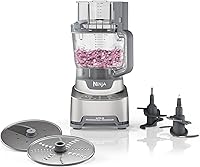
The Ninja Professional Plus 9-Cup Food Processor suits food prep first: its Auto-iQ programs cover chopping, slicing, pureeing, and dough. It comes with a chopping blade, dough blade, and reversible slicing and shredding disc, so don't assume it is meant for ice.
For other processor jobs, see what a food processor is used for or how to choose one for chopping vegetables.
What should you check before adding ice?
Read the instructions for the exact model and vessel before you start. Look for an explicit statement that ice is allowed, the recommended attachment, and any limit on batch size or run time.
Check that the bowl or pitcher and lid are seated and locked as directed. Use the attachment made for the vessel; don't swap in a processor blade simply because it fits the base.
Set the machine on a stable, dry counter with room around it. Keep the cord and controls dry, and make sure the lid is secure before adding power.
What mistakes should you avoid?
The main mistake is assuming that a powerful motor makes every attachment safe for ice. Use only the setup described in the manual, and don't fill the vessel to its maximum capacity if the instructions call for less.
Avoid running the machine continuously when the manual calls for pulses. Long runs can make it harder to notice a jam or a motor that is struggling.
Don't add liquid unless the recipe and instructions call for it. If you need a particular texture, pulse in short bursts and check the result between them instead of trying to fix uneven pieces with one long run.
How do you clean and store the machine after crushing ice?
Unplug the base before taking apart or cleaning the vessel. Handle sharp blades carefully, and use the cleaning method in the manual for the bowl, pitcher, lid, and attachments.
The Ninja Mega Kitchen System's cups, bowls, blades, attachments, and lids are dishwasher safe, with top-rack placement recommended; wipe its motor base with a damp cloth. The Ninja Professional Plus has dishwasher-safe removable parts, and the nutribullet Triple Prep System's pitchers, processor bowl, and cups are dishwasher safe.
Dry parts as directed before storing them. Keep blades in a safe place where hands won't meet the cutting edges while reaching into a cabinet.
What should you do if the manual doesn't mention ice?
Don't put ice in that processor. Use a blender whose manual permits ice crushing, buy crushed ice, or choose another method suited to your drink.
A countertop system may use one motor base with several containers, but the blades and vessels can have different jobs. Check the instructions for the specific container, rather than treating the whole system as approved for ice.
For a substitute in another recipe, what you can use instead of a food processor offers alternatives by task. If you're deciding whether to switch between a blender and processor, compare their uses first.
How can you decide whether to use a processor for ice?
Use a processor only when its manual names ice as an allowed ingredient and explains the setup. If it doesn't, choose a blender designed for ice or buy ice that is already crushed.
Pick the Ninja Mega Kitchen System if you want an all-in-one base with a pitcher described for ice, a separate processor bowl, and personal blending cups. Choose the nutribullet Triple Prep System if you want a blender, personal cups, and a processor attachment in one system, and confirm the ice setup in its manual.
Choose the Ninja Professional Plus if your main jobs are chopping, slicing, pureeing, or dough. For ice drinks, use a blender approved for the task; a processor's power doesn't replace an ice-rated vessel and attachment.
If you're still deciding whether one appliance can replace another, compare food processor and blender uses before you choose. The key rule is simple: the manual and the correct attachment decide whether your processor can crush ice safely.
Frequently asked questions
Can a food processor crush ice?
Sometimes, but only if the manual says your model can handle ice and identifies the correct vessel or attachment. Ice can strain a processor made for chopping or slicing, and the result may be uneven.
Use short pulses and small batches, and stop if the motor slows or the bowl shifts.
Is it safe to put ice in a food processor?
It can be safe when the manufacturer permits ice crushing and you follow the instructions for the right attachment, amount, and speed. A strong motor or sharp blade alone doesn't mean the machine is approved for ice.
Lock the lid, keep hands clear, and stop if the ice jams.
Should I use a blender or food processor for crushed ice?
A blender is usually the better choice for drinks when its manual says it can crush ice. A processor's main bowl and blade may not be approved for that job, even if the machine has a powerful motor.
Check the instructions for the exact blender pitcher, and don't overfill it.
How do I crush ice without damaging a food processor?
First check the manual for permission and the correct attachment. Add a small batch, lock the lid, and use short pulses, letting the pieces settle between them.
Stop if the motor strains, the bowl moves, or the blade jams.
Unplug the machine before checking a blockage.